by Colleen McNally-Murphy | Jan 9, 2017
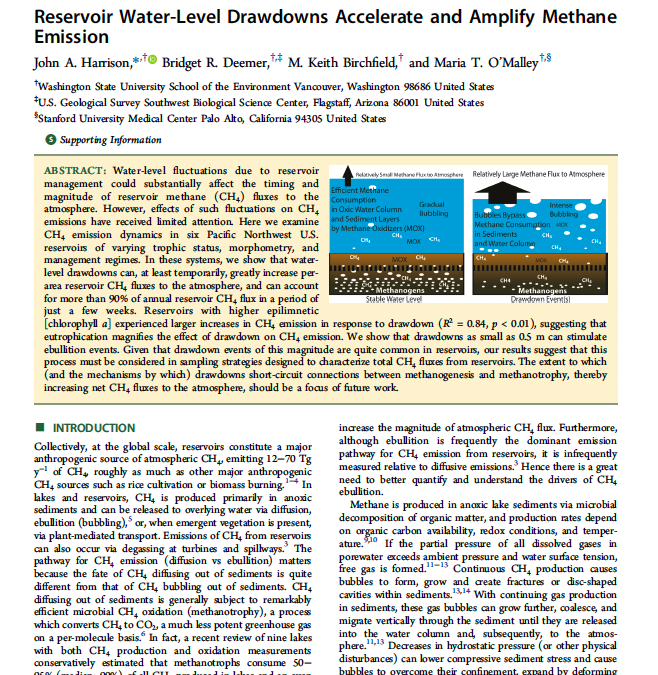
ABSTRACT Water-level fluctuations due to reservoir management could substantially affect the timing and magnitude of reservoir methane (CH4) fluxes to the atmosphere. However, effects of such fluctuations on CH4 emissions have received limited attention. Here we...
by Colleen McNally-Murphy | Oct 5, 2016
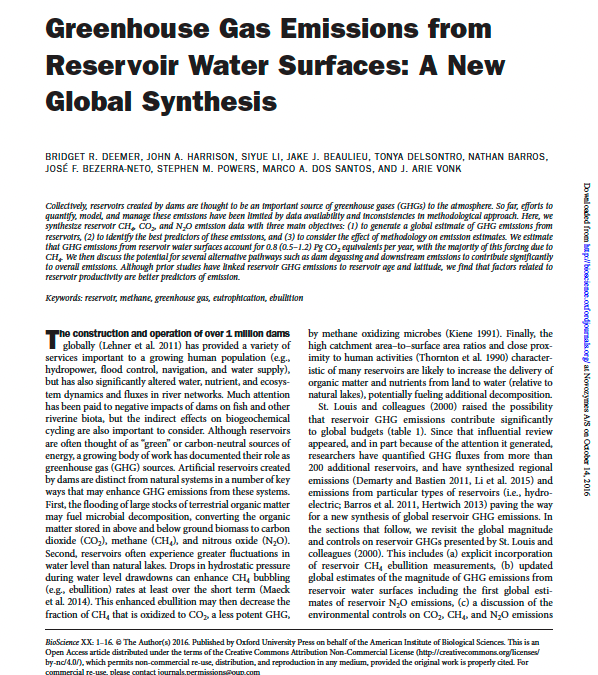
Abstract: Collectively, reservoirs created by dams are thought to be an important source of greenhouse gases (GHGs) to the atmosphere. So far, efforts to quantify, model, and manage these emissions have been limited by data availability and inconsistencies in...
by Colleen McNally-Murphy | Sep 14, 2016
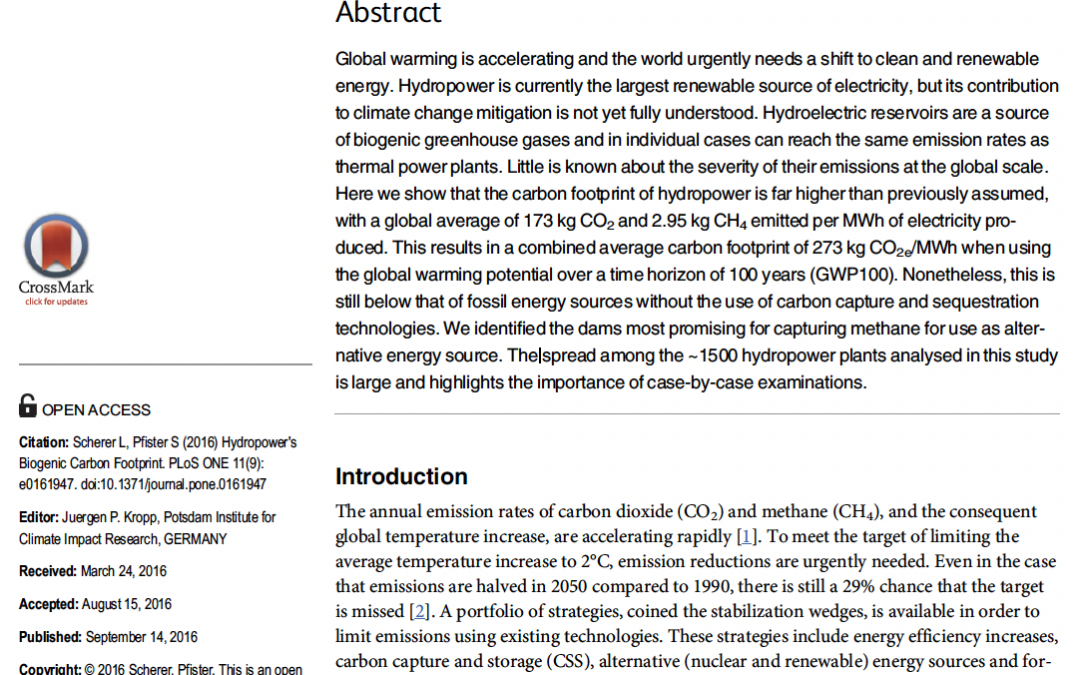
Abstract: Global warming is accelerating and the world urgently needs a shift to clean and renewable energy. Hydropower is currently the largest renewable source of electricity, but its contribution to climate change mitigation is not yet fully understood....
by Colleen McNally-Murphy | Jun 15, 2013
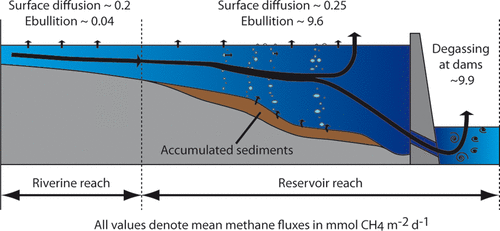
Read the press release here. Abstract: Inland waters transport and transform substantial amounts of carbon and account for ∼18% of global methane emissions. Large reservoirs with higher areal methane release rates than natural waters contribute significantly to...
by Colleen McNally-Murphy | Mar 1, 2013
Abstract: Inland water bodies, such as freshwater lakes, are known to be net emitters of carbon dioxide (CO2) and methane (CH4). In recent years, significant greenhouse gas (GHG) emissions from tropical, boreal, and mid-latitude reservoirs have also been reported. At...